OUTPUT
YOLO txt
YOLO系の物体検出学習へ
画像ごとのBBoxをYOLO形式のテキストとして出力します。
物体検出データの出力形式を確認したい方へ
AnnoBoostで作成・編集・確認した内部アノテーションから、用途に合わせてYOLO txt、COCO json、Pascal VOC xmlを書き出します。任意の外部COCOファイルをYOLOへ変換する汎用コンバーターではありません。
Windows版をダウンロードファイルは公開。アプリ利用には無料体験または有料プランの有効期間が必要です。
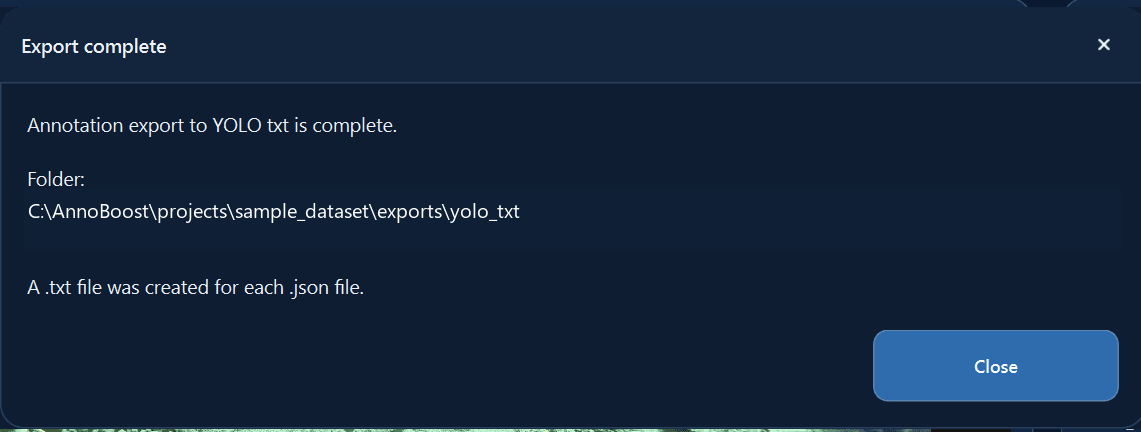
YOLO txt出力完了の実画面
出力形式を選ぶと、AnnoBoost内で確認済みのBBoxを指定形式へ書き出します。画面には保存先も表示されます。
形式選択から完了までを見る対応する出力
同じ内部アノテーションを元に出力します。納品先や学習コードが必要とする形式を先に確認してください。
OUTPUT
YOLO系の物体検出学習へ
画像ごとのBBoxをYOLO形式のテキストとして出力します。
OUTPUT
COCO互換ツールとの受け渡しへ
BBox、画像、カテゴリ情報をCOCO形式のJSONとして出力します。
OUTPUT
VOC形式を指定された納品へ
画像ごとのBBox情報をPascal VOC形式のXMLとして出力します。
出力前後の確認
受け取り側で読めるかを、全量出力の前に小さなサンプルで確かめると手戻りを減らせます。
学習コードや納品仕様がYOLO、COCO、VOCのどれを求めるか確認します。
抜け、誤検出、クラス、重複、位置・サイズを確認してから出力します。
クラス対応、画像サイズ、座標範囲を確認し、実画像へBBoxを重ねて見ます。
用途と制約
このページで案内するのは、AnnoBoost内で作成・編集したアノテーションから各形式へ出力する機能です。任意の外部COCOファイルを入力する汎用変換機能は対象にしていません。
BBox/物体検出向けに、YOLO txt、COCO json、Pascal VOC xmlへ出力できます。必要な形式は、学習コードや納品先の仕様に合わせて選びます。
いいえ。形式変換はBBox候補の抜け、誤検出、クラス違い、重複、位置・サイズを自動修正しません。人が確認した後に出力してください。
形式変換とファイル保存はPC内で行います。アプリの初回サインインと定期的な利用状況の確認にはインターネット接続が必要です。
インストーラーとZIPはアカウントなしで取得できます。アプリの利用には、無料体験または有料プランの有効期間中のサインインが必要です。
代表画像でBBoxを作り、出力ファイルを次工程のツールで読み込めるか確認してから本番データへ進んでください。